
The Science of Air – Easy Experiments for Kids
This post may contain affiliate links.
Air is all around us, but because we can’t see it, it can be tricky for kids to understand how it really works. These simple science of air experiments help kids see the effects of air, oxygen, and gases in action.
We tried these experiments during a week of learning about air, and my kids couldn’t get enough. Every experiment was so fun that they kept asking, “Can we do that again?” Thankfully, each one is quick, low-prep, and easy to repeat.
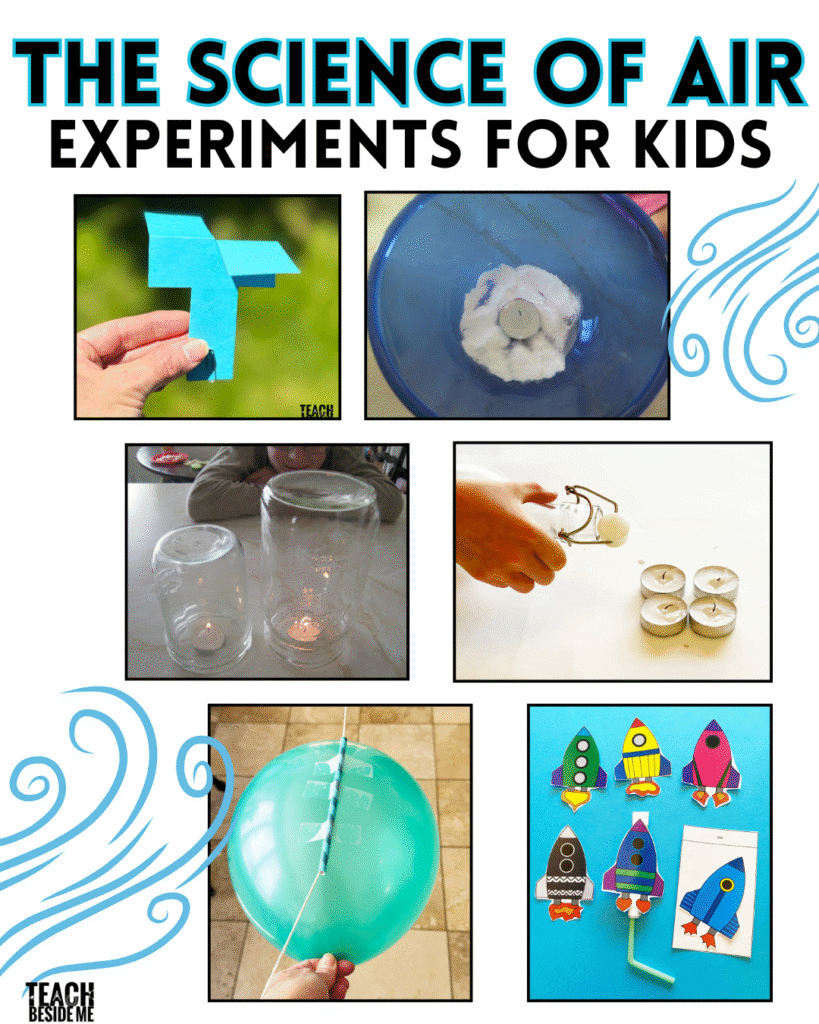
Science of Air Experiments for Kids:
Candle Under a Jar (Oxygen & Combustion)
This classic experiment is a powerful way to show that fire needs oxygen to burn.
What you’ll need:
-
Two small candles
-
Matches or a lighter
-
Two clear jars or glasses (one large, one small)

What to do:
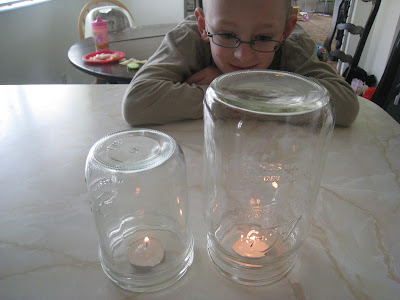
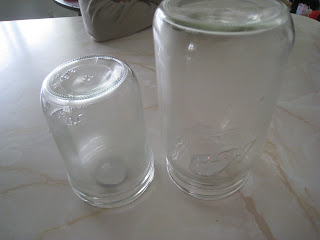
Light both candles and carefully place a jar over each one. Watch closely to see what happens.
What’s happening:
The candle under the smaller jar goes out first, followed by the candle under the larger jar. This happens because the fire uses up the oxygen trapped inside the jar. The smaller jar holds less oxygen, so the flame runs out sooner.
Science concept:
Fire needs three things to burn: fuel, heat, and oxygen. Remove the oxygen, and the fire goes out.
This is also a great moment to talk about fire safety and how fires can be extinguished by smothering them with sand, dirt, or a fire blanket.
Candle with Baking Soda & Vinegar (Carbon Dioxide)
This experiment builds on the candle concept, but introduces chemical reactions and gases.
What you’ll need:
-
A small candle
-
A shallow bowl
-
Baking soda (about 1 tablespoon)
-
Vinegar (about 1 tablespoon)
What to do:
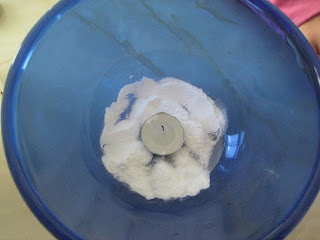
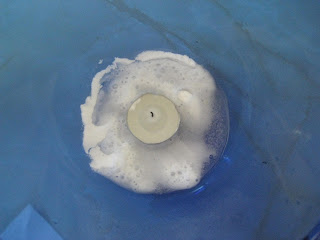
Place the candle in the center of the bowl and light it. Sprinkle baking soda around the candle, then slowly pour vinegar over the baking soda.
What’s happening:
Baking soda (a base) and vinegar (an acid) react to form carbon dioxide gas. Carbon dioxide is heavier than air, so it sinks and pushes the oxygen away from the candle.
Without oxygen, the candle flame goes out — even though you never touched it.
Science concepts:
-
Chemical reactions
-
Carbon dioxide gas
-
Oxygen displacement
This one is especially fun because it feels a bit like “magic,” and kids usually want to repeat it several times.
Balloon Rockets (Air Pressure & Motion)
This was hands-down the favorite air experiment in our house.
What you’ll need:
-
A balloon
-
String
-
Tape
-
Two chairs or supports
What to do:
Thread the string through the balloon, tape the balloon to the string, inflate it (without tying), and let go. See the Full Instructions HERE!

What’s happening:
As air rushes out of the balloon, it pushes backward. That force propels the balloon forward — just like a jet engine.
Science concepts:
-
Air pressure
-
Action and reaction
-
Thrust and motion
Kids love experimenting with different balloon sizes and string lengths to see how it changes the speed.
Fire Extinguisher Experiment (Using Air to Put Out a Fire)
This experiment demonstrates a real-world application of air and gases by showing a unique way to put out a flame.

This post shows a unique way to put out a fire using air.
See how to to this experiment HERE: Fire Extinguisher Science Experiment for Kids
Paper Helicopters (Air Resistance & Lift)
Paper helicopters show how air resistance slows motion and creates lift as the blades spin and fall.

Try it here: Paper Helicopter Science
Science concepts:
-
Air resistance
-
Surface area
-
Gravity vs drag
Straw Rockets (Air Pressure & Thrust)
Straw rockets demonstrate how air pressure can create forward motion when air is released quickly.
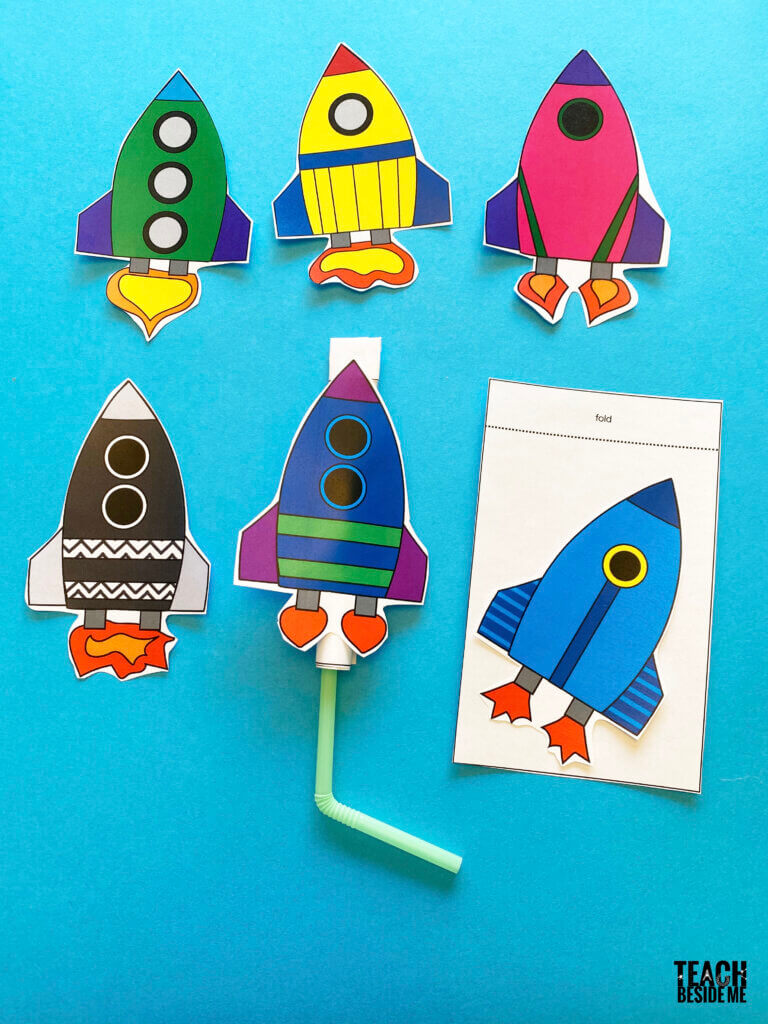
Try it here: Straw Rocket Experiment
Science concepts:
-
Air pressure
-
Thrust
-
Action and reaction
Tornado in a Bottle
This demonstrates how air moves up through the center of the vortex while water spins downward around it. This models how air currents move in storms — rising and rotating at the same time.
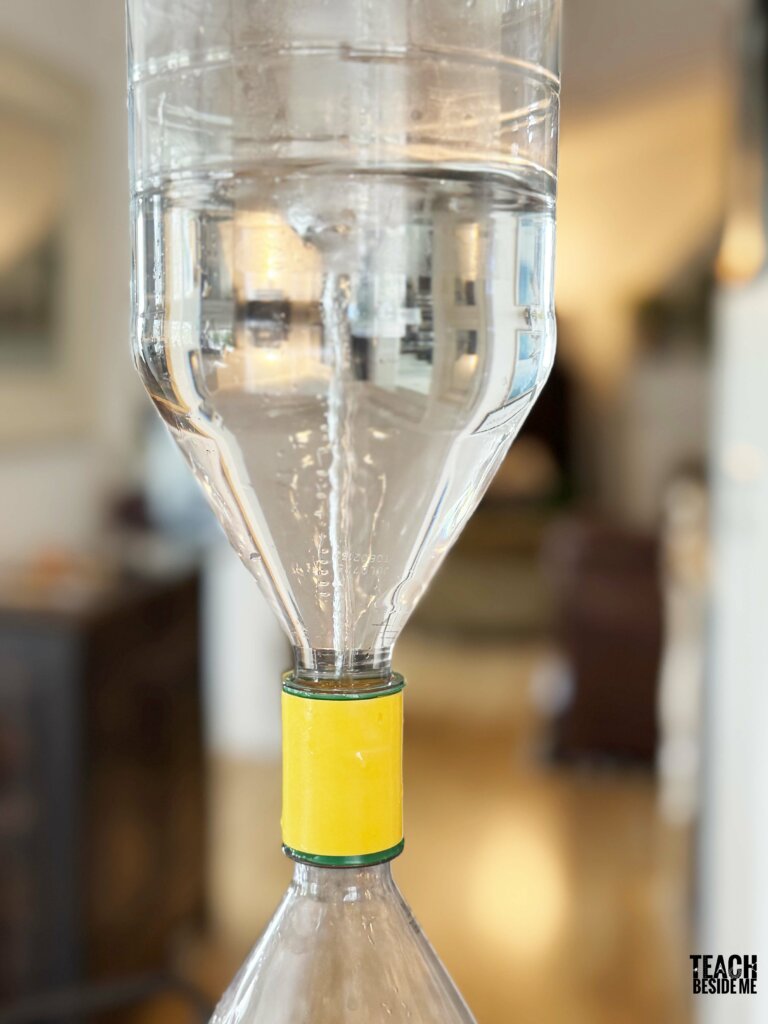
Learn more about the Tornado in a Bottle here.
Science concepts:
-
Vortex
-
Rotation
-
Air pressure
-
Centripetal force
Why These Science of Air Experiments Work So Well
-
Simple household supplies
-
Clear cause-and-effect results
-
Short setup time
-
Easy to repeat (a big win with kids)
These experiments are perfect for homeschool, classroom science, co-ops, or a quick afternoon STEM activity.
See More Science Experiments for Kids:
The Science of Flight with Paper Airplanes
The COOLEST Science Art Projects for Kids
Science Experiment: How to Clean Pennies


🙂 Just by chance we did the experiments with air and fire this week too.
Wonderful learning!
What a great list of fun experiments!
I love this – my boys would love this! Thanks for linking up to Tactile Tuesday!
You did some of my favorite air experiments. I love the candle and the jar one. I’m sorry I’m so slow getting around and commenting lately, life’s been hectic.
Thanks for linking up to Science Sunday!